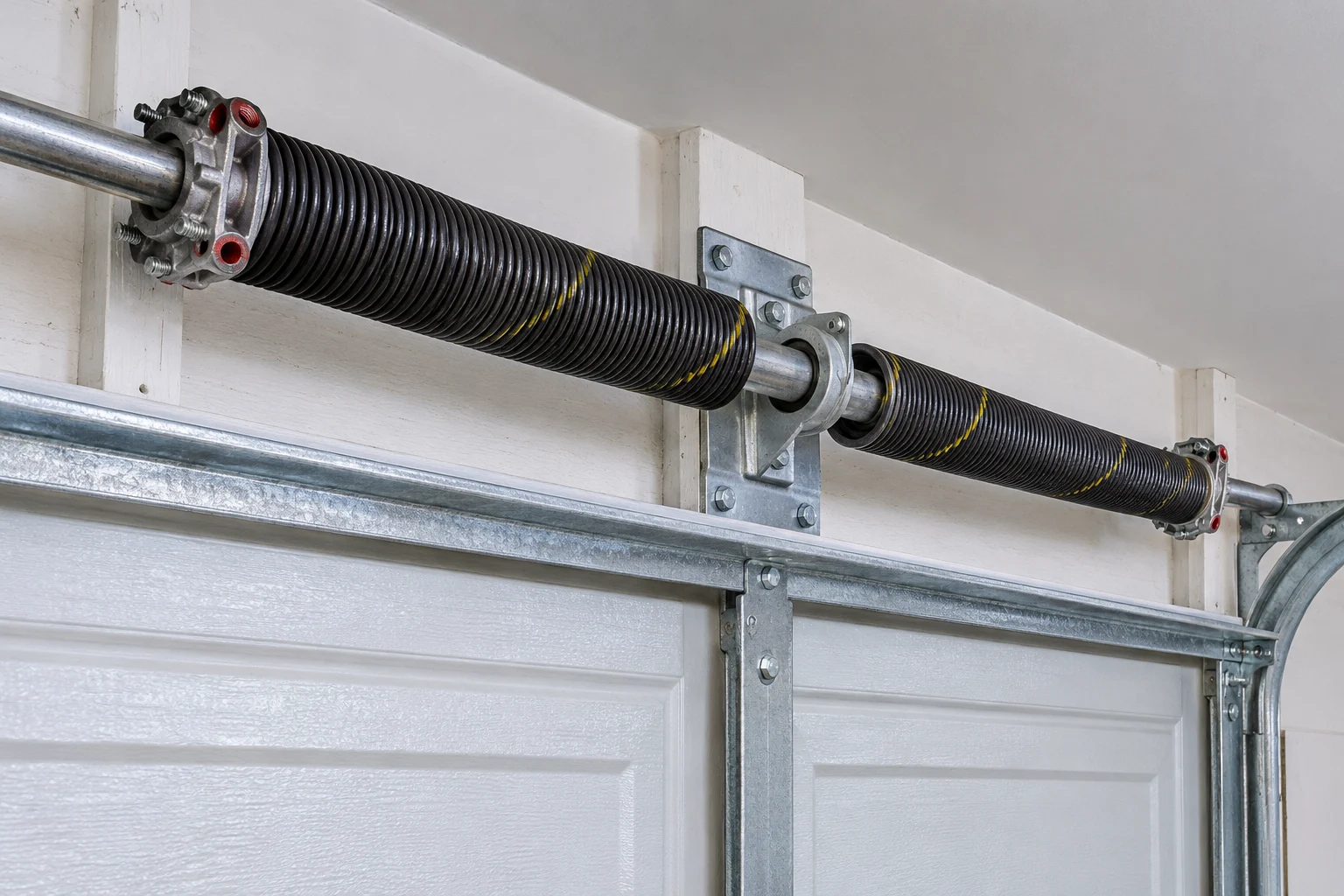
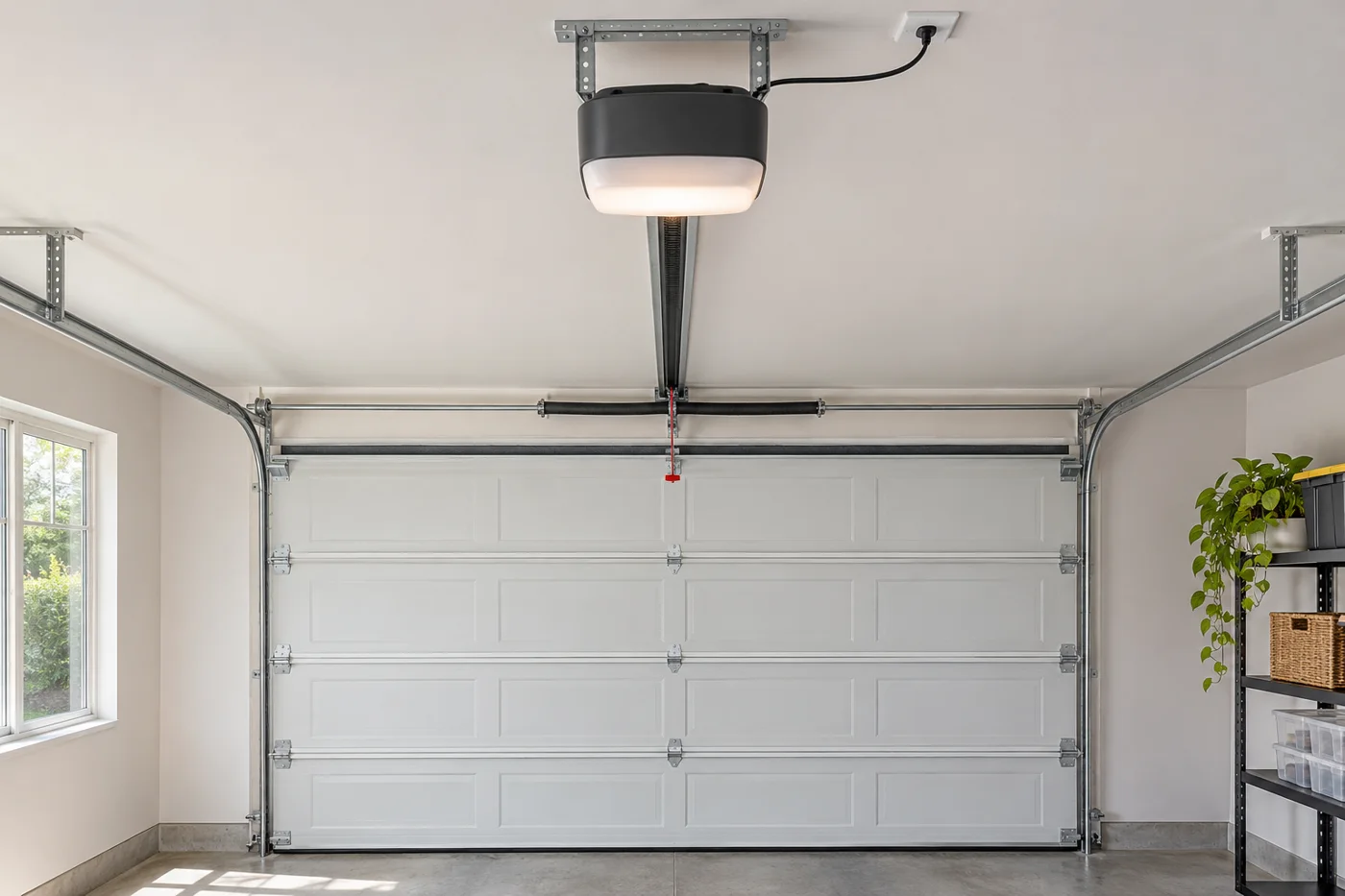
The spring supports the load
The opener is intended to move a properly balanced door; it is not a substitute for working springs. A damaged spring can leave a door much heavier than expected. Continuing to drive it with the opener may add strain to other components. Do not test the weight yourself or assume a stronger operator will solve the underlying issue.
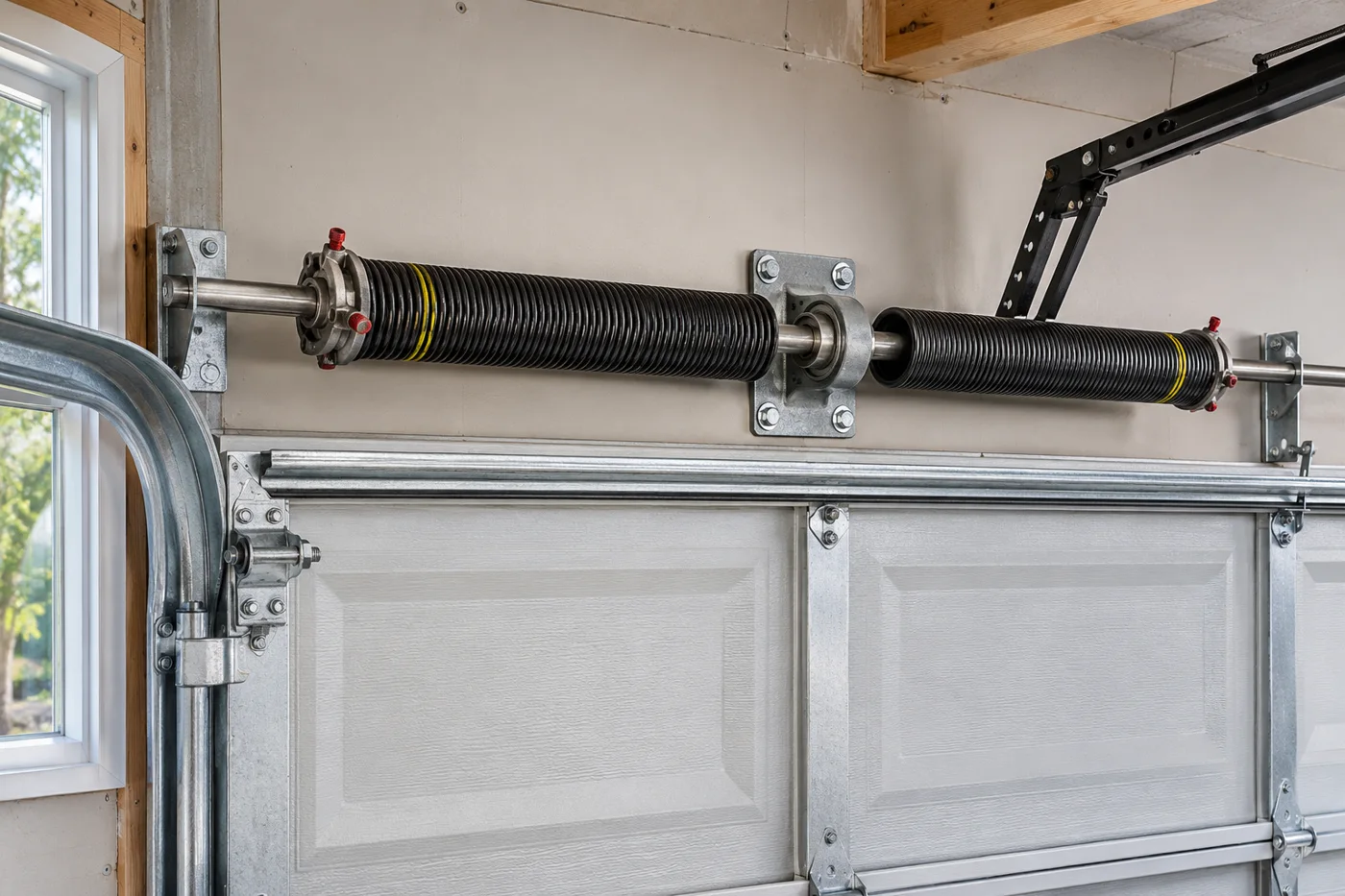
Describe it without touching loaded hardware
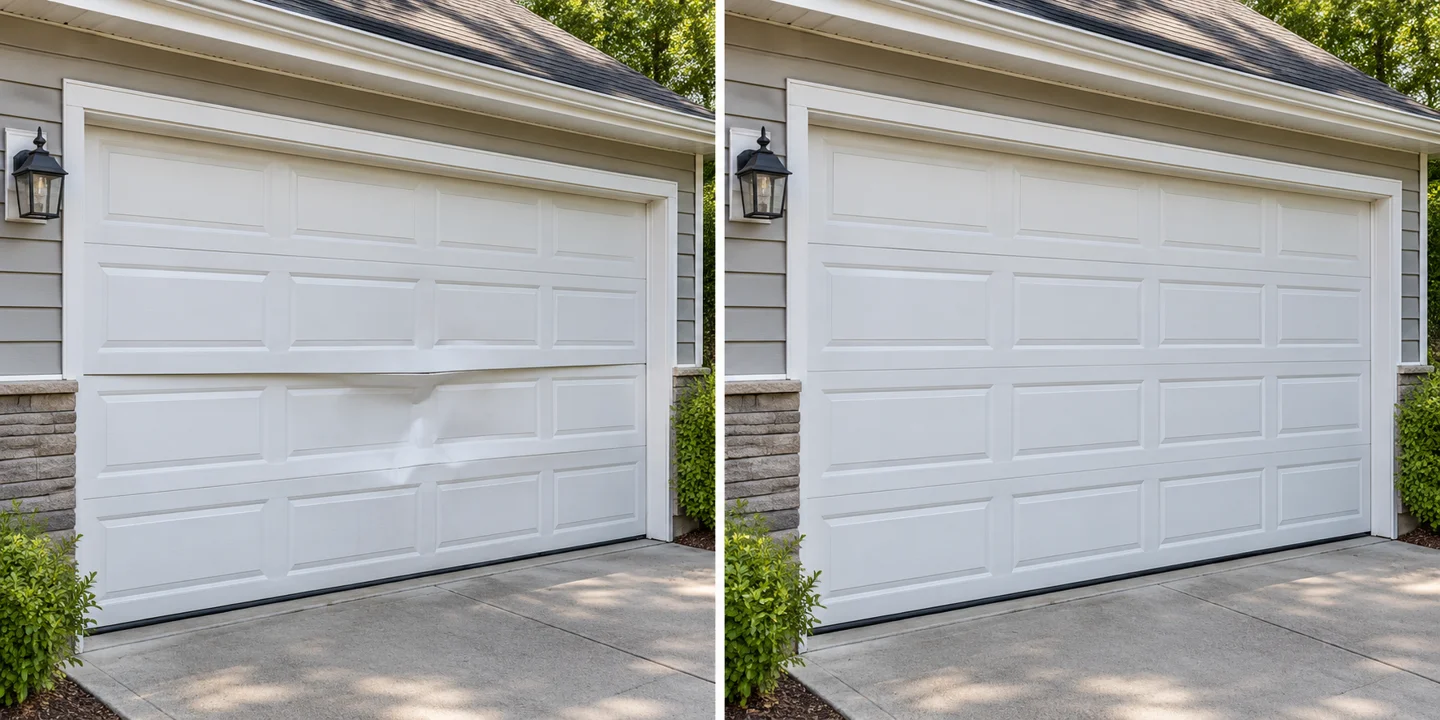
From a safe distance, explain whether the door is fully closed, raised or crooked. Mention a visible separation in a spring, a hanging cable or an unusual bang. Do not loosen bottom brackets, cable drums or spring fixtures, and do not stand under a door that is not secure. These parts can store substantial force even when the door seems still.
A replacement must match the door
Spring selection depends on the actual door, its construction, weight and lifting arrangement. Counting coils from a distance or matching a color mark alone is not a substitute for an assessment. The inspection should consider the balance, cables and attachment points as well as the failed spring. Ask how the final door balance and safety operation will be checked.
Make the call useful
Tell us whether the opening blocks a vehicle or the only convenient access into the building. If the door is not fully closed, keep people away and explain the position before scheduling is discussed. Call 24/7 to start the repair request; the work and appointment timing are confirmed by phone.
For your local garage
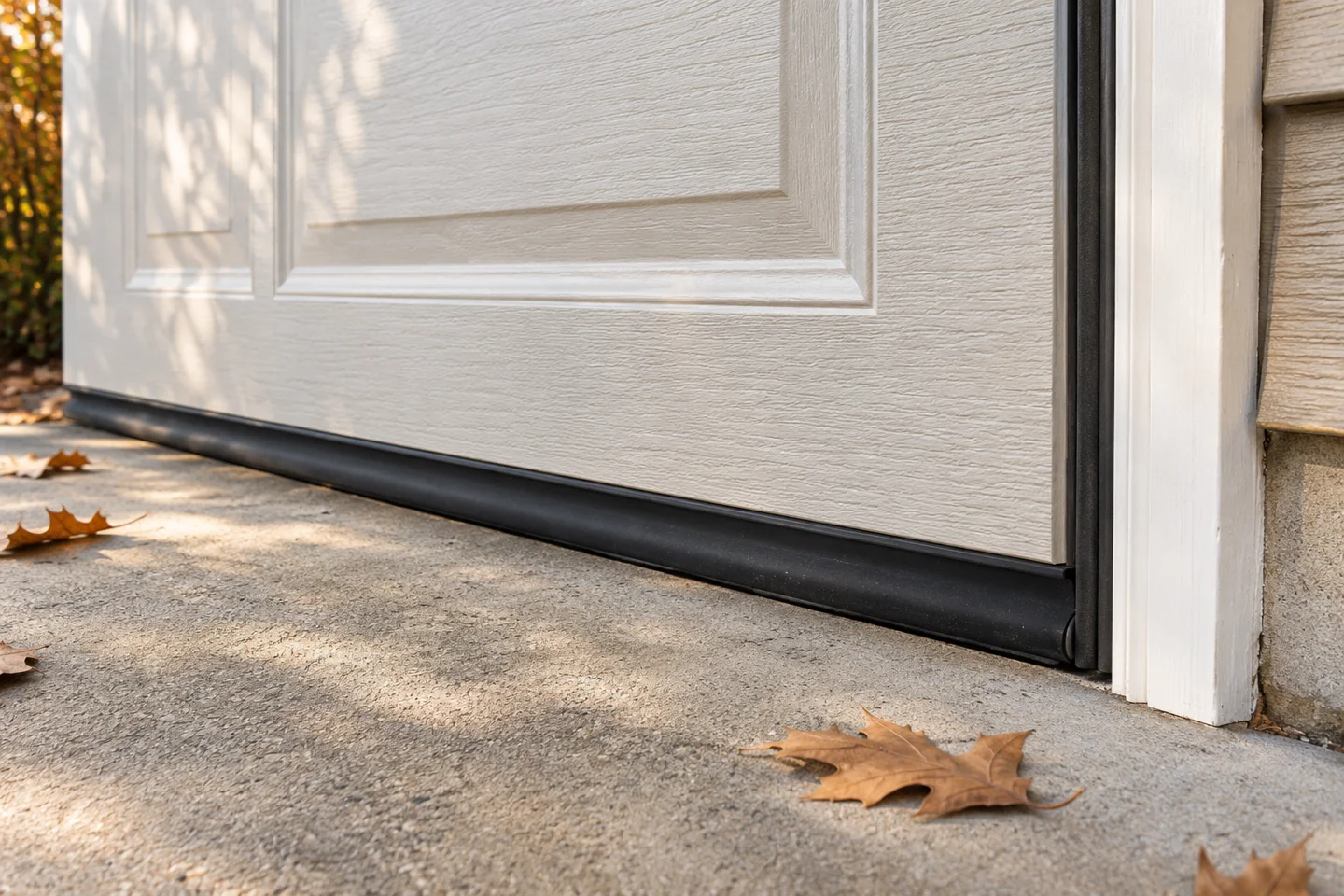
West Michigan weather makes the threshold and perimeter worth a closer look. Snow, road-salt residue, damp leaves and repeated freezing conditions may affect what you see around a garage opening. Explain whether the problem follows a cold night, appears during closing or happens every time; that pattern helps the conversation without proving the cause.
A Grand Rapids city garage, a newer Ada attached bay and a rural opening farther from town can have different clearances, power access and daily use. The useful starting point is the door in front of you: its construction, travel and relationship to the space inside.