
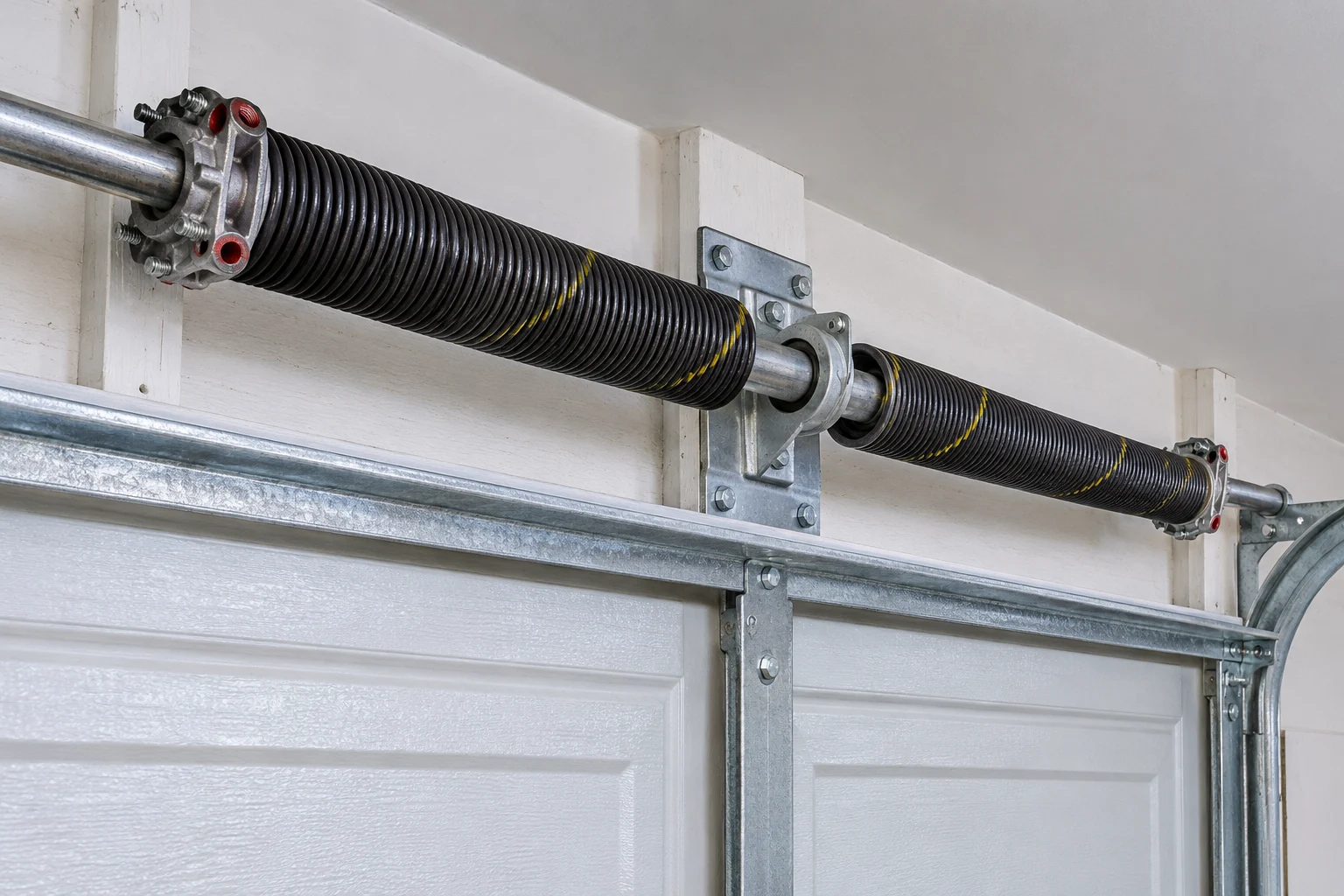
Need service? Explore the related service or call to discuss your garage.
A cold morning does not identify the failed part
West Michigan winter can make a stuck door especially disruptive. Tell us whether it is caught at the threshold, whether the motor runs and whether there was a bang or uneven lift. Those observations matter more than assuming the weather caused a particular failure.
A suddenly heavy door, loose cable or leaning assembly calls for a stop. Do not force it with the operator or test the weight manually. Keep people away and do not pull the release on a raised unstable door.
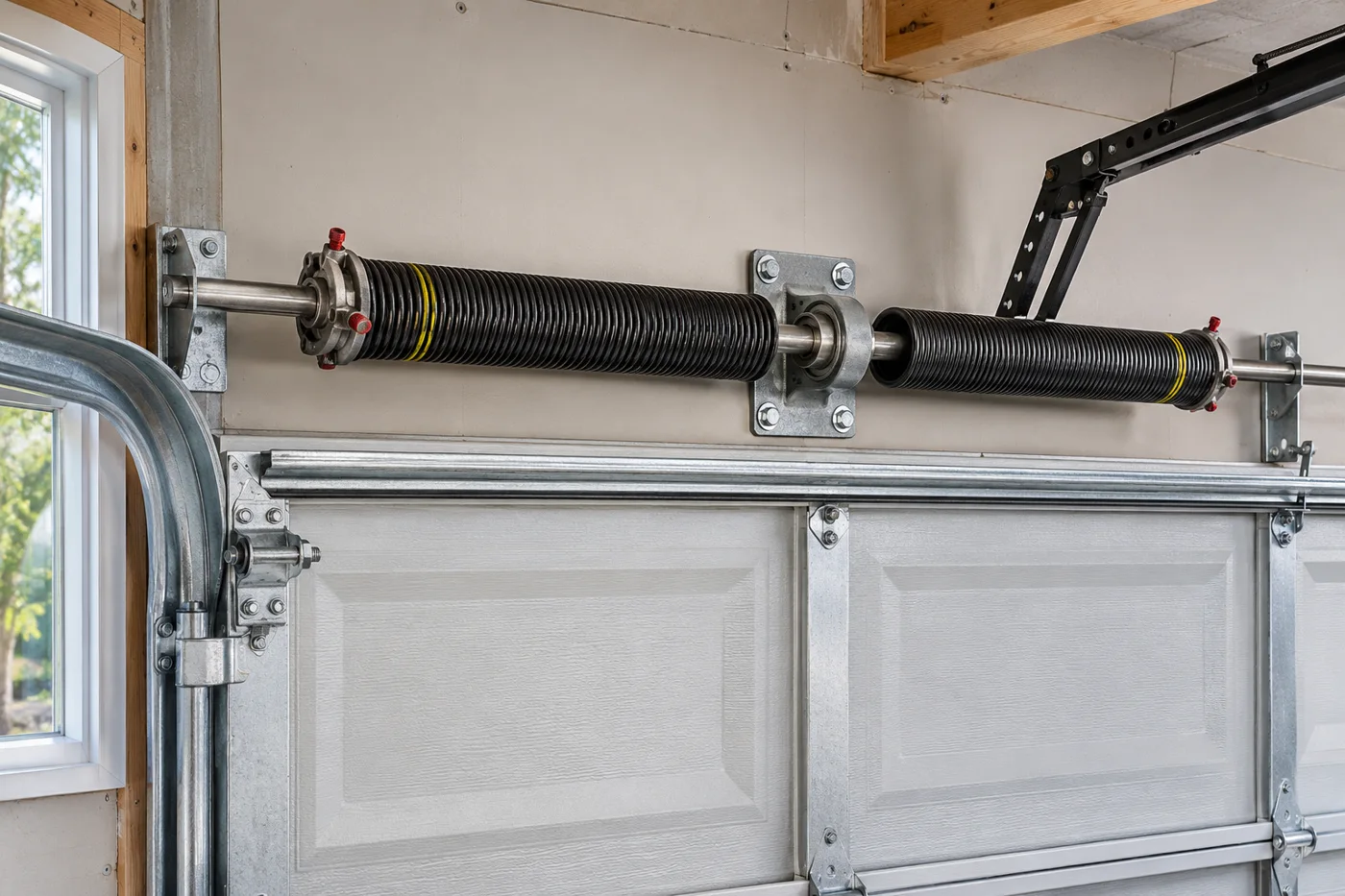
Spring selection follows the actual assembly
The correct component depends on door construction, weight and the lifting arrangement. A part that looks the same or carries a familiar color mark is not automatically suitable. The assessment establishes the specifications rather than asking you to choose them from a generic listing.
Ask how related cables, attachments and hardware are considered. A spring may be the obvious failure while another condition also affects the repair. The proposed scope should connect each item to the findings and keep optional changes separate.
Judge the system-level outcome
The door must be considered with the operator after lifting work. Ask how balance, movement and applicable safety functions will be checked. An operator should move a properly balanced assembly, not compensate for an unresolved load problem.
| Observation | Safe next step |
|---|---|
| Loud bang and heavy door | Stop use; describe lifting-system concern |
| Uneven door or loose cable | Keep clear; do not release or adjust |
| Only a remote fails | Describe controls and operator separately |
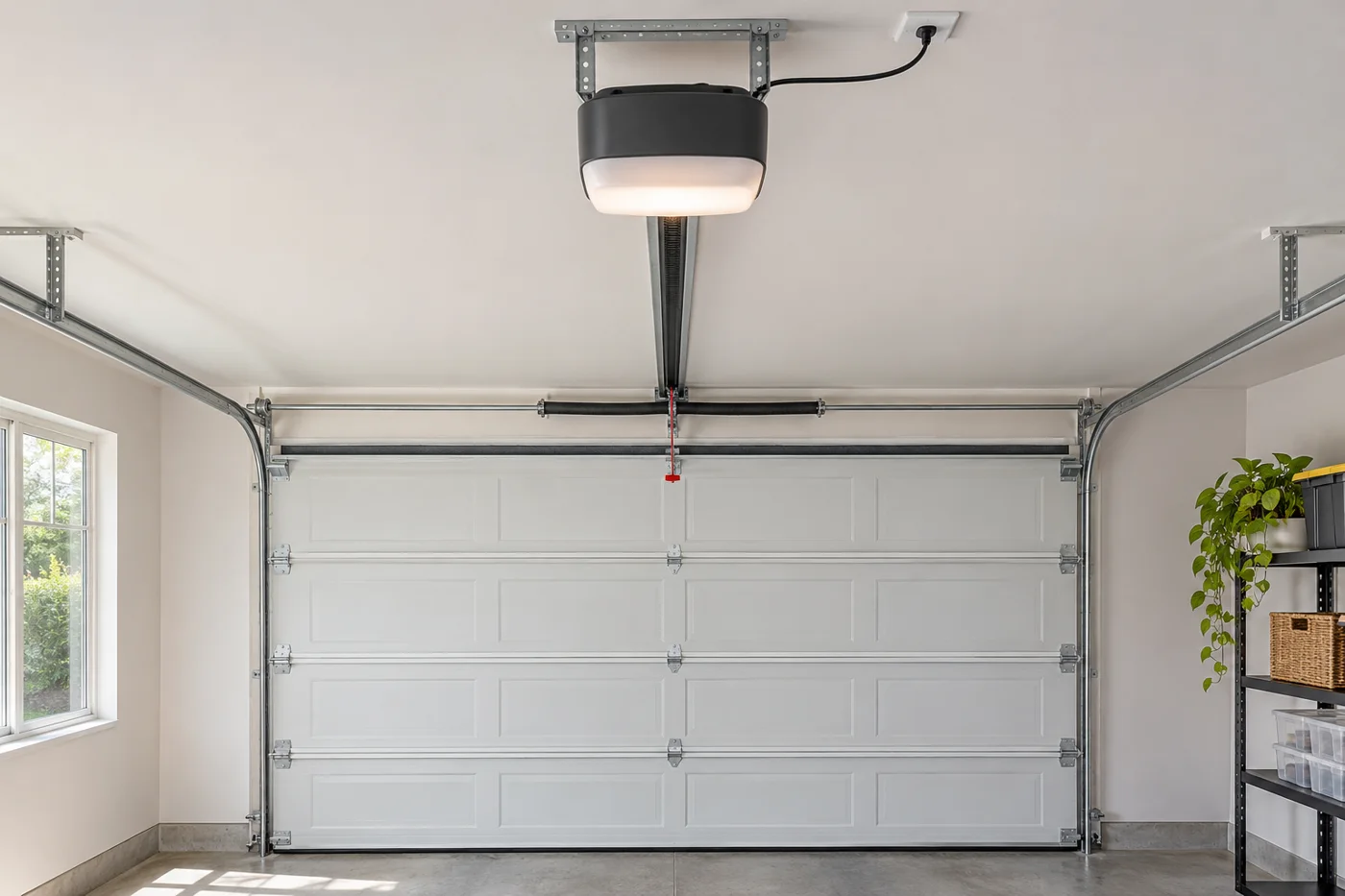
Do not select the part from an online example
A photograph of a broken spring can resemble many other assemblies. The appropriate replacement depends on the door and lifting configuration, not just its visible length or finish. Ask how the assessment establishes that match. Do not handle the spring or loosen fixtures to collect measurements for a quote request.
The completed repair should be discussed in terms of the door’s balance and movement, including the relationship to the operator. If other wear is identified, ask what connects it to the present fault. This keeps necessary system work separate from optional convenience changes.
Prepare the access details
Say whether a vehicle is trapped, whether the door is fully closed and whether another entrance exists. Storage beside the tracks, a limited approach or an occupied work area can affect access. Leave loaded hardware alone rather than trying to create a route through the opening.
Call 24/7 to start the request. Suitability and appointment timing are confirmed by phone. Keep the equipment instructions and raise new heavy or uneven movement promptly in the future; a past repair does not make a new symptom harmless.
Further reading
Follow the instructions for your exact door and operator. This guide supports recognition and planning; work on loaded lifting hardware belongs with a trained door-systems technician.
DASMA: Garage door system safety ↗U.S. CPSC: Automatic garage door opener safety ↗